
Texas Public Records
Texas public records include a wide range of government documents that any person can access. Court filings, property deeds, vital statistics, criminal histories, and government meeting records all fall under the public record umbrella in this state. The Texas Public Information Act gives broad access rights to anyone who asks, with no requirement to state a purpose or give your name. Whether you need to look up a court case, check property ownership, find a birth or death record, or research government activity, Texas maintains records systems across all 254 counties. This guide covers the main sources, how to request documents, which agencies are involved, and where to search online or in person.
Texas Public Records at a Glance
What Texas Public Records Include
Public records in Texas span many agencies and record types. The term covers any document, paper, letter, map, book, tape, film, or other item that was created or received by a government body in the course of its official business. This covers state agencies, city and county offices, school districts, and most other entities that operate with public funds or authority.
The main types of Texas public records you can search or request include court case files from district and county courts, real property records such as deeds and mortgage documents recorded by the County Clerk, vital records like birth and death certificates held by the Texas Department of State Health Services, business filings and assumed name certificates from the Secretary of State, tax assessment records from county appraisal districts, criminal history records maintained by the Department of Public Safety, and Commissioners Court minutes and meeting records held at the county level. Each of these record types has its own agency, its own fees, and its own rules about who can access what.
Texas gives the public broad access to these records. You don't need a lawyer to request them. Most can be found online now, at least for basic lookups. When you need a certified copy or want to view a full case file, you usually go in person to the office that holds the record.
The Texas.gov portal serves as the state's central hub for reaching government services and public records online. From there you can connect to dozens of agency tools including driver license services, business filings, and open records resources.

The portal offers 24/7 access to state services and a digital assistant called TxT that can guide you through many common government tasks without calling an office.
Texas Public Information Act
The foundation for public records access in Texas is Government Code Chapter 552, known as the Texas Public Information Act. This law requires government bodies to respond to records requests within 10 business days. You don't need to explain why you want the records. A letter, email, or online submission all count as a valid request.
To request public records from any Texas government agency, you submit a written request to the agency's public information officer. Once they get it, they have 10 business days to provide the documents, give you a cost estimate if charges will top $40, or tell you in writing why they can't release them. If an agency wants to withhold information, it typically must first seek an opinion from the Texas Attorney General's office. That process has its own timeline and rules. The AG's opinion is binding on the agency.
Some information is exempt from release under the Public Information Act. Personal data like social security numbers and bank account numbers may be redacted. Home addresses of certain public officials can be withheld. Records related to active criminal investigations, pending litigation, and real estate transactions in progress may also be restricted. Personnel records, medical information, and certain law enforcement data all have their own specific exemption rules. The list of exemptions is long, but it doesn't swallow the rule. Most government records in Texas are open.
The Texas Attorney General's Open Government division handles disputes over public information requests and publishes guidance for agencies and requestors. The AG also enforces the Texas Data Privacy and Security Act, effective July 1, 2024, which gives residents rights over how companies handle personal data.

If you believe an agency wrongfully withheld records, you can file a complaint with the AG's office. They investigate and can order agencies to comply.
The full text of the Texas Public Information Act is on the official Texas statutes website. Standard copy fees are $0.10 per page for paper records. Government agencies must give you a written cost estimate before charging more than $40.
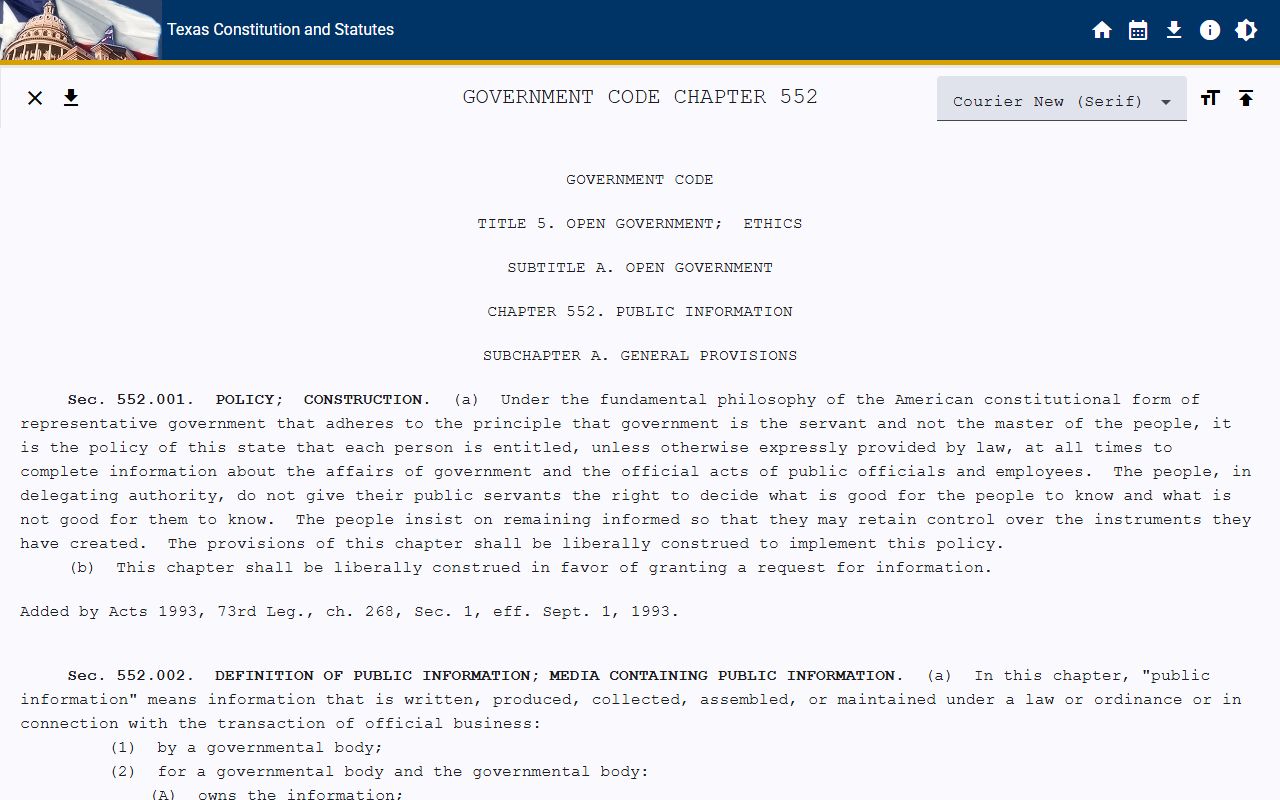
Requestors can also inspect records in person at no charge under the PIA. You go to the agency's office during business hours and review the documents there without paying copy fees.
Court Records in Texas
Court records in Texas are held by the District Clerk and County Clerk in each of the state's 254 counties. The District Clerk handles records for district courts, which cover felony criminal cases, civil cases above certain dollar amounts, family law matters, and juvenile cases. The County Clerk handles county court records including misdemeanor criminal cases, probate matters, and smaller civil disputes. Both offices are separate even when they share a courthouse building.
The Texas Office of Court Administration runs the re:SearchTX public access portal for statewide court case information. This tool lets you search by name, cause number, or case type across many Texas courts at no charge. You can look up case status, party names, hearing dates, and docket entries without going to the courthouse. Not every county is connected yet, but coverage keeps growing. Larger counties like Harris, Dallas, Tarrant, and Bexar also run their own online portals.
The Texas Supreme Court oversees the civil side of the state court system. Its nine justices are elected to six-year terms in statewide elections. The court sets rules for civil procedure, evidence, and appellate matters, and it has administrative control over the State Bar of Texas under Texas Government Code Section 81.011.
The Texas Supreme Court sits in Austin and serves as the court of last resort for civil matters. When a significant civil or family law issue has no clear answer, it often ends up here.
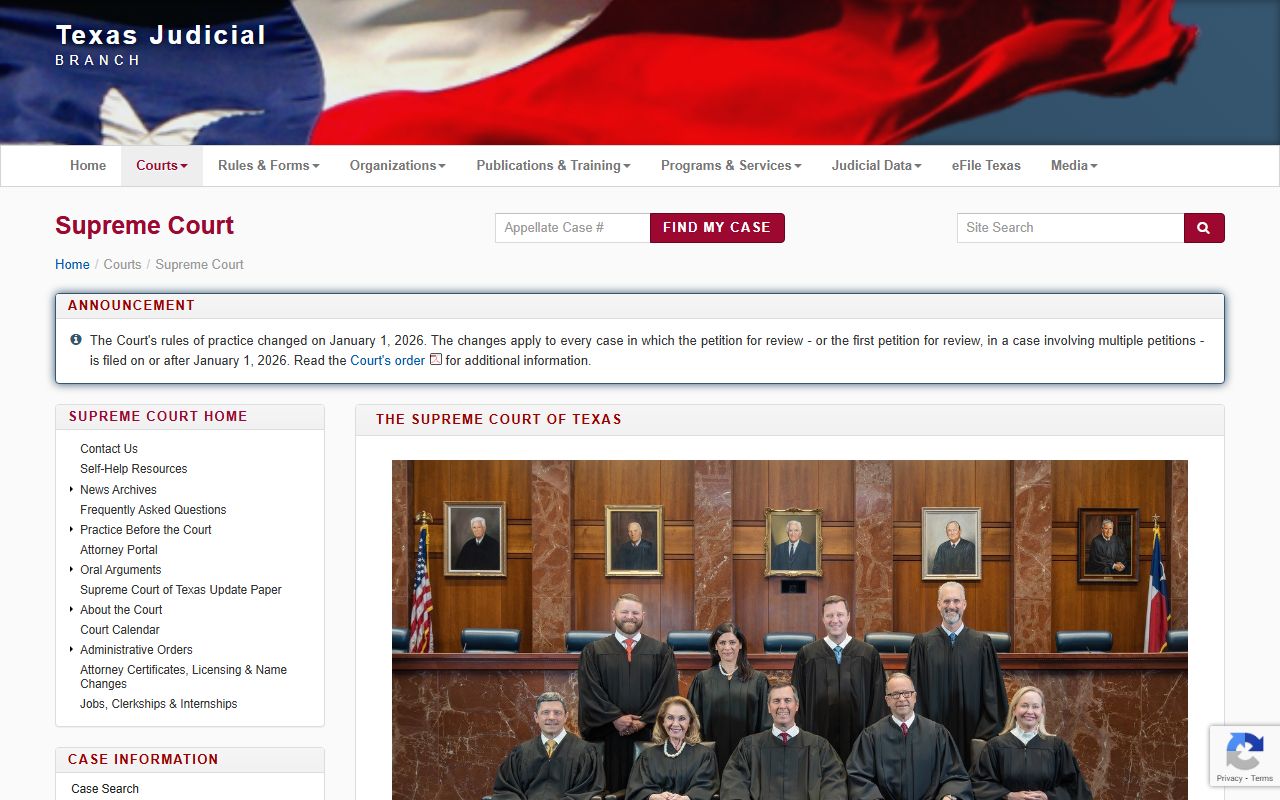
The court promulgates the Texas Rules of Civil Procedure, Texas Rules of Appellate Procedure, and Texas Rules of Evidence, all of which govern how cases and court records are handled statewide.
The Texas court system includes roughly 2,800 courts ranging from the Supreme Court and Court of Criminal Appeals down to Justice of the Peace courts at the precinct level. The Office of Court Administration collects statistical data from all court levels and makes it available to the public.
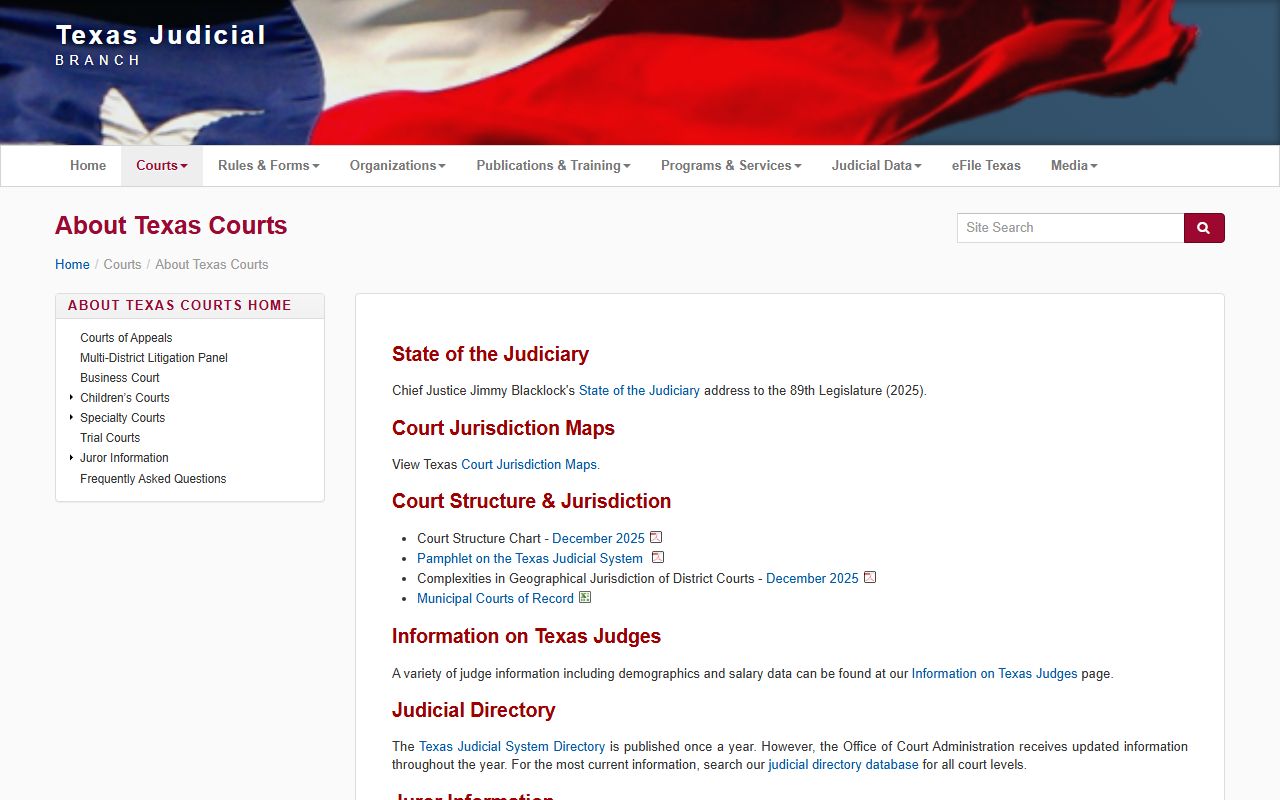
Court jurisdiction maps, the Texas Judicial System Directory, and a searchable judicial database are all available through the About Texas Courts page maintained by OCA.
Electronic filing is now mandatory for most attorneys through eFileTexas.gov, the state's official e-filing system. Over 100 million filings have been processed through the system, with more than 760,000 registered users including nearly 465,000 self-represented litigants. The system covers all 254 counties and 565 court offices.
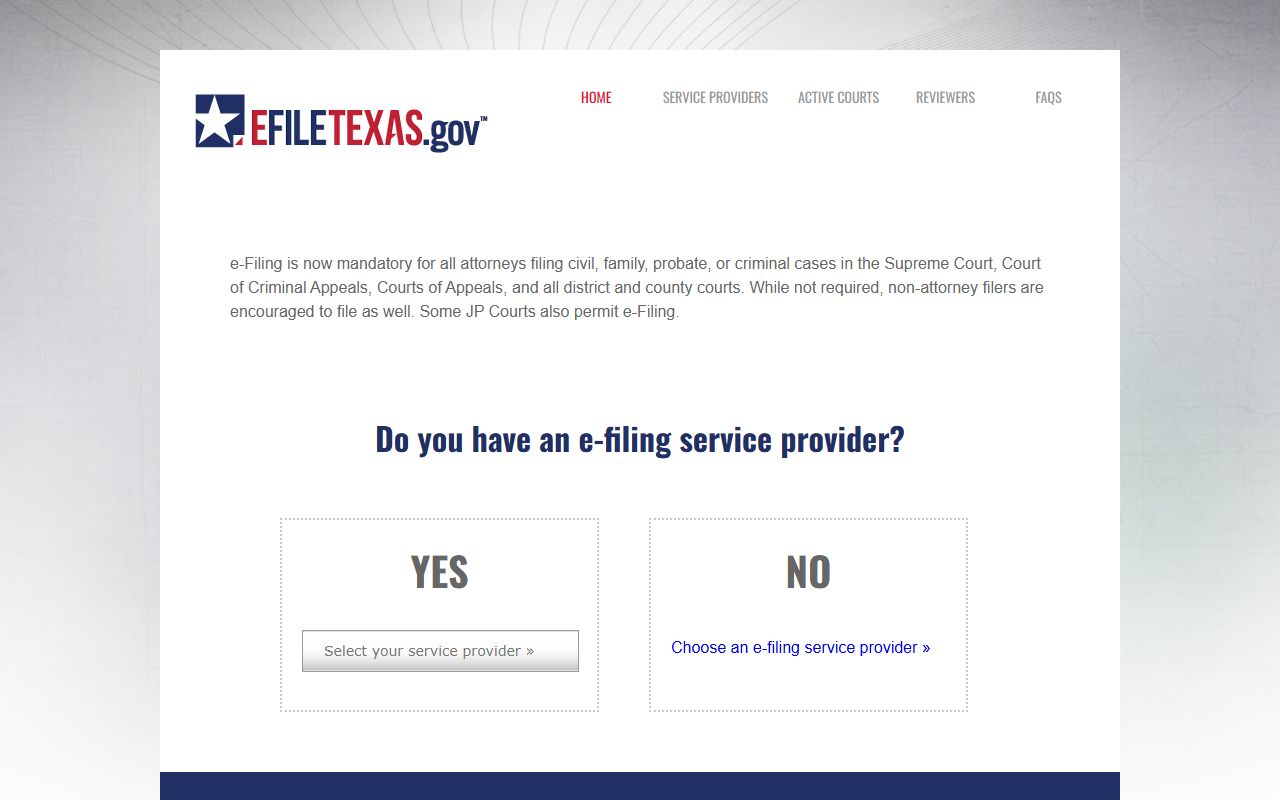
Self-represented filers can also use eFileTexas voluntarily. It's not required for them, but it speeds up the process compared to filing paper documents in person.
The Texas Office of Court Administration provides technical assistance, training, research, and support to trial courts, appellate courts, and specialty courts across the state.
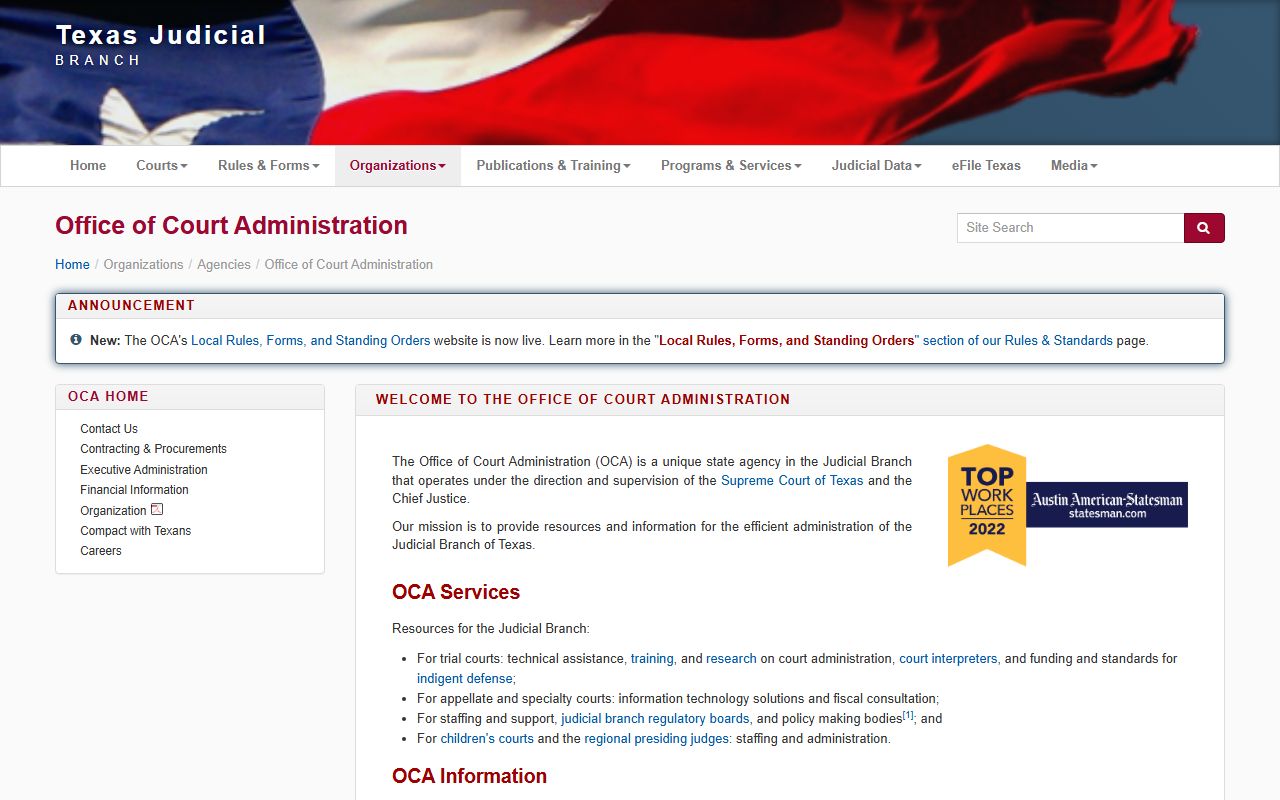
OCA also manages the Public Safety Report System, which tracks bail decisions and pretrial release data, and provides court statistics and reports that are open to the public.
Property Records and Business Filings
Property records in Texas are filed with the County Clerk in the county where the land sits. These records include warranty deeds, deeds of trust, mortgage documents, mechanic's liens, judgment liens, UCC filings, and plat maps. Most county clerks now offer online search tools to find property records by grantor or grantee name, instrument number, or date range. Standard copy fees run $1 per page, with certified copies costing $1 per page plus a $5 certification fee. Recording fees for new documents are set by state law at $26 for the first page and $4 for each additional page.
The Texas Secretary of State handles business filings and corporate records at the state level. Assumed name certificates (DBA filings), corporation registrations, limited liability companies, and Uniform Commercial Code filings are all maintained there. Marriage license records and notary public bonds are also part of the County Clerk's responsibilities in each county, separate from state-level business records.
The Texas Secretary of State is the official state authority for elections, business entity filings, the Texas Administrative Code, and voter registration systems.

Business name searches, UCC lien searches, and election results are all accessible through the Secretary of State's online portal without any fee for basic lookups.
Note: Some historical property records in smaller Texas counties date to the mid-1800s and may still be on microfilm rather than in a digital database accessible online.
Vital Records in Texas
Birth and death certificates, marriage records, and divorce verifications are maintained by the Texas Department of State Health Services Vital Statistics Section. These are legal documents used to prove identity, establish relationships, and handle estate matters. The DSHS keeps records going back many decades, though the completeness of older files varies by year and county of origin.
To get a certified copy of a birth or death certificate, you must be a qualified person under Texas Health and Safety Code Section 191.051. That means you are the registrant, a parent or guardian, a legal representative, or someone with a direct and tangible interest in the record. You need to submit the correct application form, acceptable identification, the right fee, and any required supporting documents. The DSHS processes requests online, by mail, or in person at their Austin office. Processing times depend on the method you choose and current workload at the agency.
The DSHS Vital Statistics Section handles all certified vital record requests for Texas, including birth certificates, death certificates, marriage applications, and divorce verification letters.
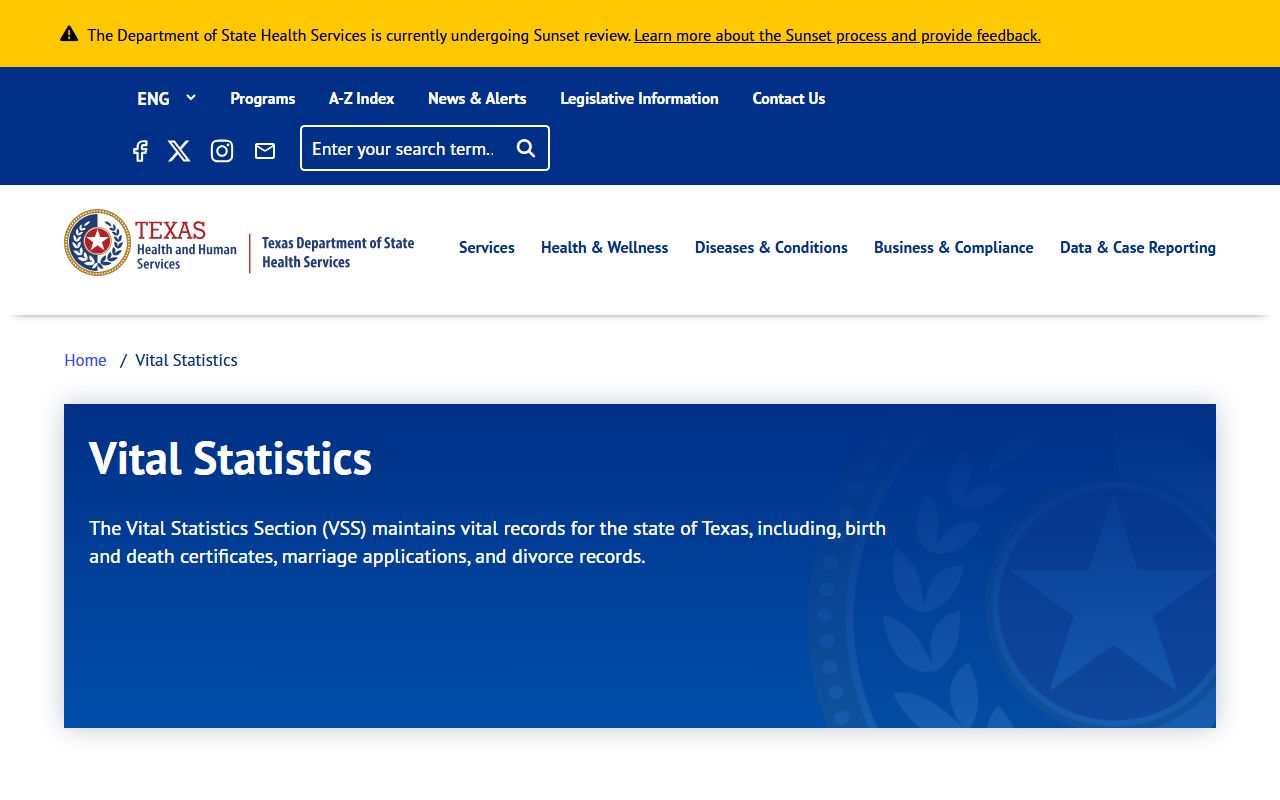
Local vital record offices are also available across the state, organized alphabetically by county on the DSHS website, and can handle in-person requests for people who prefer a local option rather than dealing with the Austin office.
The full range of Texas health services, including immunization records and health data resources, is managed through the DSHS main website.

Birth certificate fees start at $23 for the first certified copy. Death certificates start at $21 for the first copy. Additional copies cost less when ordered at the same time.
Criminal Records in Texas
Criminal history records in Texas are managed by the Department of Public Safety Crime Records Division. The DPS serves as the Texas State Control Terminal for eight state and national criminal justice programs. The division collects criminal history data submitted by local law enforcement agencies and compiles it into statewide databases that are also forwarded to the FBI's national systems.
Anyone can request a criminal history record check in Texas. You can search online through the DPS website by name for $3.15 per search. A fingerprint-based search costs more but is more accurate because names and dates of birth can match multiple people. The DPS also maintains the Sex Offender Registry, which is searchable by name, address, city, zip code, or county at no charge. The registry provides offender photos, addresses, and conviction information and is updated regularly by local law enforcement agencies.
The Texas Department of Public Safety handles driver licenses, vehicle records, and law enforcement services, including criminal history access for the public.

DPS issues driver licenses valid for up to eight years to Texas residents and maintains records on all licensed drivers, which are available to qualified requestors for legitimate purposes.
The DPS Crime Records Division provides 24/7 access to law enforcement information systems and handles biometric identification, CJIS security compliance audits, and the Texas LESO program for law enforcement equipment support.
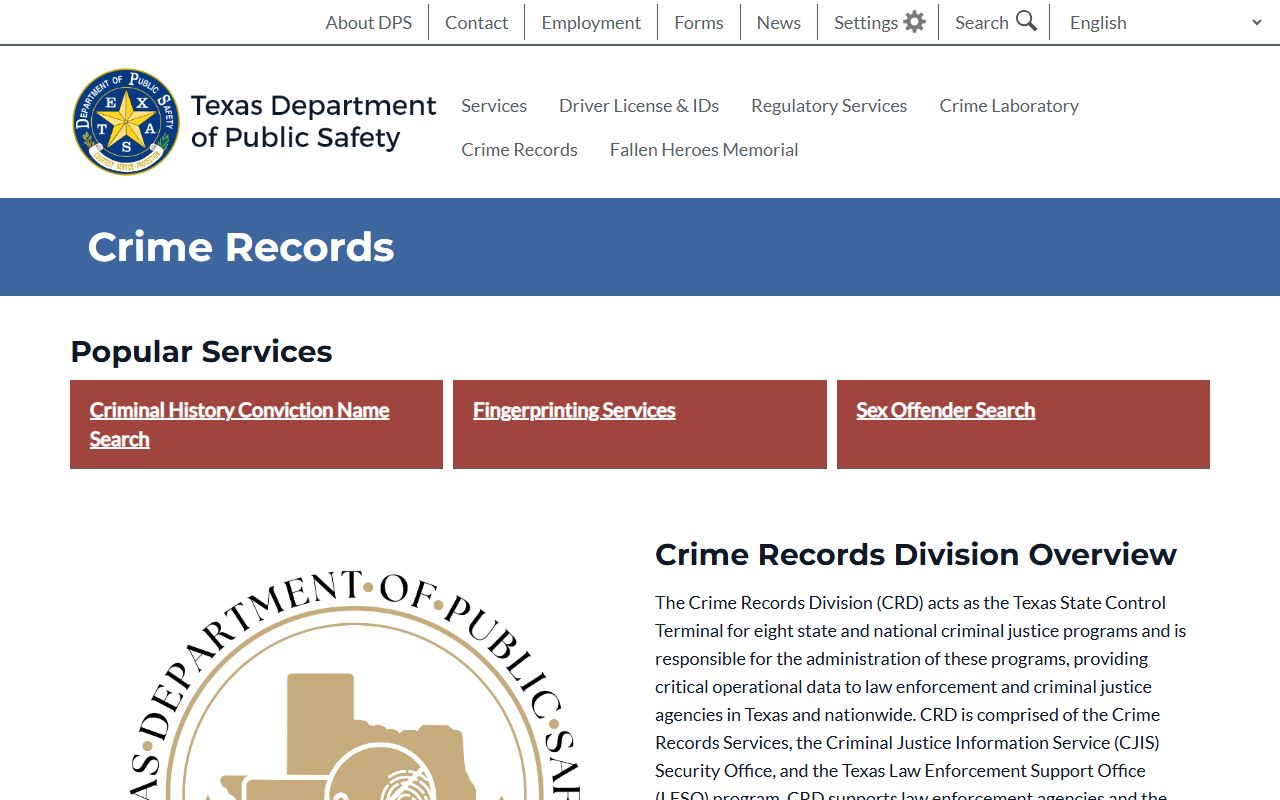
The division's Criminal Justice Information Service Security Office audits local agencies on a regular schedule for compliance with FBI CJIS Security Policy standards.
Texas Records Laws and the Statutes
The primary law for accessing Texas public records is the Texas Public Information Act in Government Code Chapter 552. Beyond the PIA, access to specific record types is governed by other statutes across multiple Texas codes. Property recording rules are in the Local Government Code. Vital records access rules are in the Health and Safety Code. Court record access is governed by the Texas Rules of Civil Procedure and judicial rules set by the Supreme Court. Criminal history access has its own rules in the Government Code as well.
All Texas statutes are available at the official Texas Statutes and Codes website maintained by the Texas Legislature. The site lists every Texas code and lets you search by code name, chapter, or section. You can pull exact statute language at no cost.
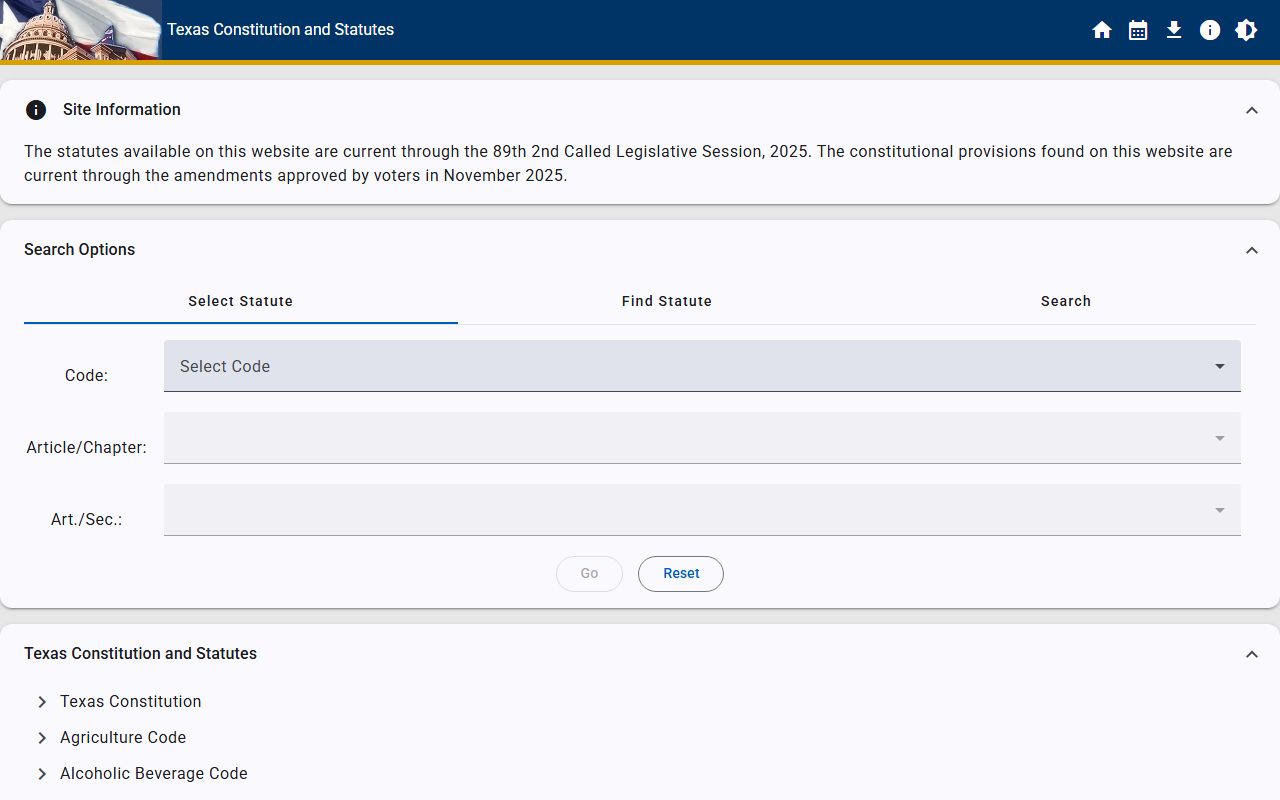
Government Code Chapter 552 includes all exemptions, request procedures, AG opinion processes, and penalty provisions for agencies that fail to comply with the PIA.
Historical and Archived Public Records
The Texas State Library and Archives Commission serves as the official repository for historical government records in the state. The commission holds archival state records, government documents, publications, and genealogical research resources. TSLAC also provides research assistance for people looking into older records that may not be available through current digital systems. Records held there date back to the republic period, making it one of the primary sources for early Texas government history.
The Texas State Library and Archives maintains materials across a wide range of subjects relevant to Texas history, government, and research.

Researchers can access genealogical resources, historical government documents, and Texas newspaper archives through TSLAC's online catalog and in-person research services at their Austin facility.
Federal court records for Texas are accessible through the PACER system, which gives public access to federal district, bankruptcy, and appellate court filings. Texas has four federal judicial districts: Northern, Southern, Eastern, and Western. Each district handles its own records, and PACER lets you search and view documents for a small per-page fee.
How to Get Texas Public Records
Most public record requests in Texas start with a written request to the government agency that holds the records you need. Under the Texas Public Information Act, no specific form is required. A letter or email that describes what you want is enough. You don't need to say why you want them or give your personal information. Just be specific enough for the agency to know what records you're asking for.
Each agency has a designated public information officer who handles these requests. State agencies often have online request forms on their websites. County offices typically accept requests by mail, in person, or by email. Some counties have online portals that let you request and pay for copies digitally, which saves a trip to the courthouse.
Cost depends on what you're asking for and which agency holds it. Court records cost $1 per page for plain copies and $1 per page plus $5 for certified copies in most county courts. PIA requests for other government records typically run $0.10 per page. If a request will cost more than $40, the agency must give you a written estimate before charging you. You have to agree to pay before they proceed with large requests.
Note: Government bodies have 10 business days to respond to a public information request. If they need more time, or want to withhold anything, they must notify you in writing and often must seek a ruling from the Texas Attorney General before withholding records.
Browse Texas Public Records by County
Each of Texas's 254 counties maintains its own public records system. County clerks hold property records and vital statistics. District clerks hold court case files. Pick a county below to find contact info, online search tools, and local resources for public records in that area.
Texas Public Records by City
Major Texas cities maintain their own public records for city departments, municipal courts, police reports, and open records requests. Pick a city to find local contact info, city clerk resources, and open records request details specific to that city.